Product marketing · Healthcare
Here's how I helped a healthcare team triple their purchases through a comprehensive communication plan overhaul
3x
Purchase rate over 3 months
+10%
Sign-up rate
3
Channels: email, text, phone
The Problem
Sign ups for a healthcare company's app plateaued. Through their mission-focused work, their goal was to provide as many users with free or low cost healthcare benefits as possible, but this couldn't happen if users didn't sign up. The increased interest from providers, insurance companies, and customers was not directly translating to more registrations or sales. In addition, things like HIPAA, and long approval cycles needed to be considered when planning how to reach out to customers.
With these considerations in mind, I worked with the team to create a consistent, repeatable monthly communication plan to re-engage previous shoppers, and onboard new ones. I focused on building and operating an engagement plan for Email, Text, and Phone each with their own flows and urgency levels. Part communication focused, part operations, I worked with the team to create an engaging and sustainable outreach plan.
Channels: Email, Text, Phone
The Solution
My Process
1. Examine current data
The first step in my process was to look at current engagement rates. Current sign up rates sat at around 40-50% across all segments.
The current methods of outreach were very limited, with little to no monthly touchpoints with customers. Email segmentation was also limited.
However, the general interest rate in the app was steadily increasing. This was measured through inbound contacts, number of meeting requests, conference conversations, etc.
2. Setting Expectations
As this was a communication/engagement project in the healthcare space, setting realistic expectations was important. As a 30% email open rate in the healthcare industry is typical, so increasing this by any significant margin was ambitious, but not impossible. Thoughtful segmentation increases CTR significantly in this sector, so that was a major goal. This would require a strong multi-channel approach that is repeatable, and not overwhelming for the staff.
Implementation
Weekly outreach cadence
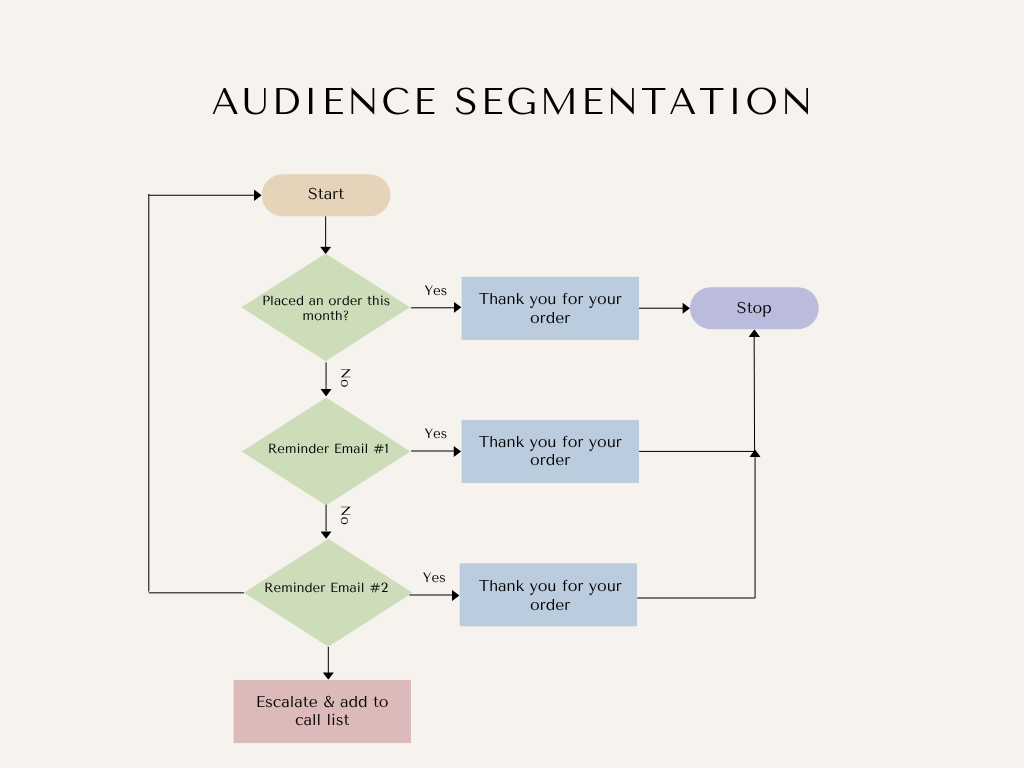
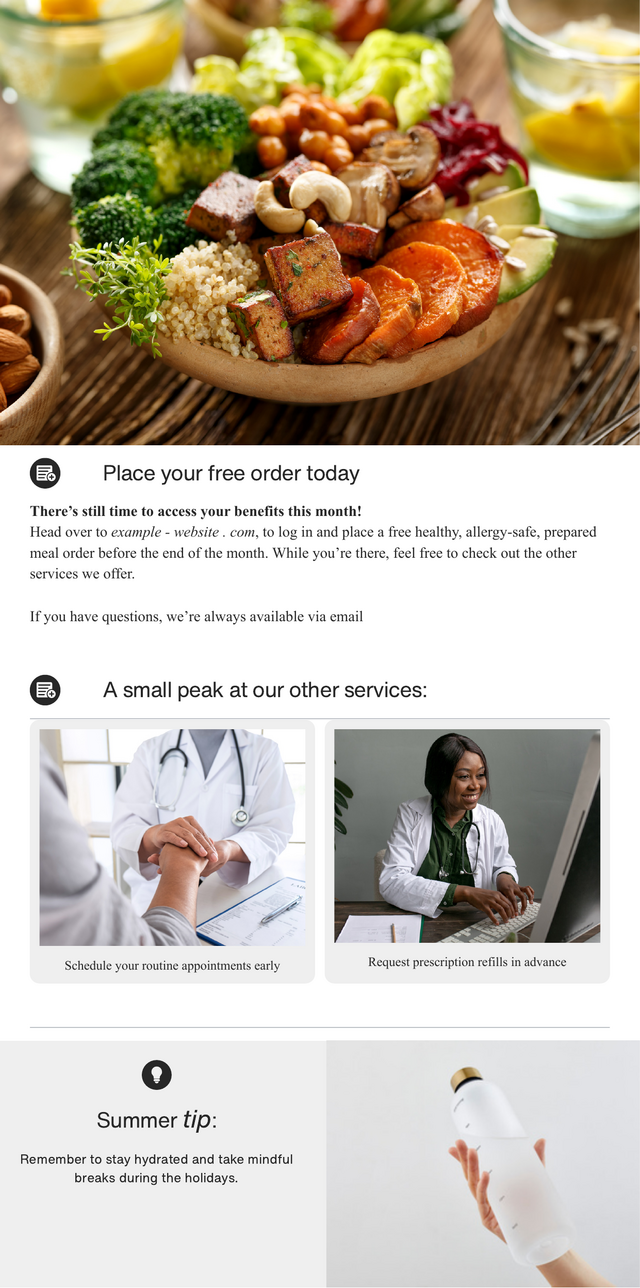
This was the basis for all future engagement with users. Starting mid-month, begin segmenting users based on past activity. This was accomplished by setting up a weekly automated report that showed the user's current status and past activity, something that didn't exist before I started this project. Users who had previously engaged were in one bucket, users who had never engaged but had expressed interest in another, etc. Weekly reminders were sent to users in this cadence with further segmentation based on open & CTRs. If activity remained stagnant, the users are moved to a more immediate method of communication like phone.
Reduced onboarding friction
I worked with the engineering and operations teams to simplify the sign up process. I suggested removing 2 initial onboarding steps, and we were able to reduce user confusion and increase conversion rates by a measurable amount. This simplified process was added to every onboarding email we sent going forward.
Automation
By setting up automations within the email client and data reporting structure, we were able to reduce employee pressure in remembering who and when to reach out. I set 3 distinct flows based on segmentation and levels of engagement. In order to reduce the time in creating HIPAA-friendly content that needed to be approved by a state board, I worked with the operations lead to create an automated tool that pulled together all of the required data automatically each time we needed to do a submission. This significantly reduced approval time and also helped alleviate employee pressure.
Conclusion
In all, the changes implemented tripled purchase rates over the course of 3 months, increased the sign up rate by 10%, and most importantly freed up employee time to make direct connections with users who would benefit from the free and low cost benefits offered within the app.